Ngorongoro National Park
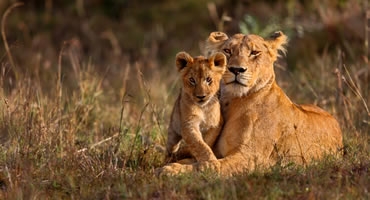
Lake Manyara National Park is an unspoiled paradise of groundwater forest fed by underground springs and teeming with wildlife such as elephants, hippos, giraffes, buffaloes, antelopes, and some of the largest baboon troupes in Africa. But its most iconic attraction is undoubtedly its tree-climbing lions, and people flock from all over the world to see these iconic predators lounging in the trees.
The lions of Lake Manyara National Park are a rarity among their own kind, being some of the only lions in the world to regularly climb trees and use them as places as rest. Only Uganda's Ruwenzori National Park shares this distinction. Elephant, giraffe, buffalo, and wildebeest can be found grazing in unexpected clearings in the woodlands or heading towards water sources to drink or wash. The rivers and riverbeds provide scenic vistas for wildlife watching. Warthog seem to thrive here, growing notably fat and it is a natural playground for baboons and monkeys.
Lake Manyara and is a good introduction to Tanzania's Northern Circuit safari experience. Manyara is a magical and scenic park with a horseshoe-shaped driving route through wooded pathways that wind between the banks of the alkaline lake and the impressive rise of the Great Rift escarpment.
Climate
The climate in Lake Manyara NP is mild and temperate. The altitude ranges from 954 to 2,055m (3,130-6,742ft), and it gets cooler the higher you go. Temperatures drop by about 6.5°C for every 1,000m you climb (or 3.5°F per 1,000ft). Average temperatures are consistent throughout the year.
Getting there
By road - Lake Manyara National Park is about 126 km from Arusha (about a 2- to 3-hour drive).By air - Arusha is served by two airports. Arusha Airport has daily flights from numerous local destinations and Kilimanjaro International Airport has daily flights from local, African and international airlines. 30-minute flights can be booked from Arusha to Manyara Airstrip.
When to go
Lake Manyara is recommended year-round, with only the months of April and May being a bit wet and difficult for travel. Due to its small size, most lodges are located outside of the park, en route to either Tarangire or Ngorongoro Crater.